


How intelligent forecasts could revolutionize parking space searches and traffic control: The AI-supported parking guidance system
AI-supported parking guidance system: Smart mobility project by Lukas Hautzinger
For many drivers, searching for a free parking space is part of everyday life and one of the biggest stress factors in urban traffic. An innovative project from [ui!] Urban Mobility Innovations shows how artificial intelligence can help here: with a prediction-based, intelligent parking guidance system that brings together user needs and municipal control.
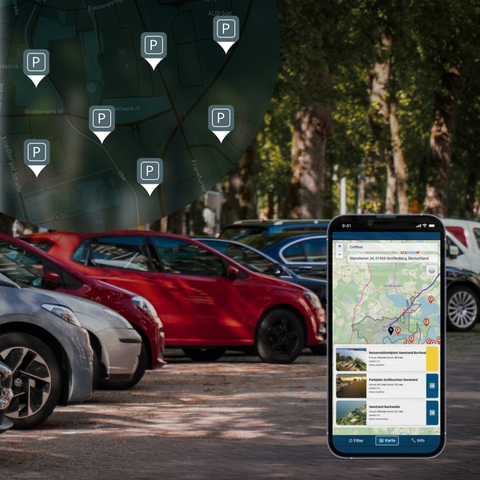 For drivers, the challenge often only begins once they reach their destination. Navigation systems reliably guide them to the city center, the lake, or other attractions, but they don't answer the crucial question: Where can I park and under what conditions? The result is unnecessary searching, increased traffic, higher emissions, and frustration for everyone involved. Especially in tourist regions or when visitor numbers are high, the search for parking spaces quickly becomes a bottleneck that affects both the quality of the stay and the flow of traffic. In addition, individual requirements such as barrier-free parking spaces, a specific budget, or a connection to public transportation have hardly been taken into account so far.
This is where the Intelligent Parking Guidance System, or iPLS for short, comes in. The concept was developed as part of student Lukas Hautzinger's master's thesis at [ui!] Urban Mobility Innovations. The aim of the project is to use artificial intelligence and machine learning not only to map available parking spaces in real time, but also to predict their availability in advance. It is based on data-driven assessments that take into account factors such as utilization, distance, price, and individual preferences. The system then guides users directly to the best available parking space. Without detours and unnecessary search traffic.
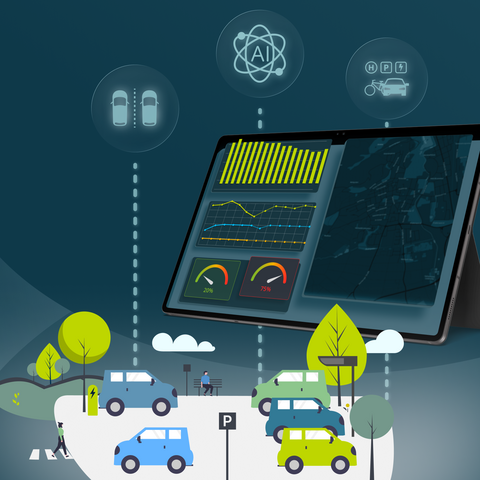 The iPLS pursues a dual perspective. On the one hand, there is an app for users. It allows them to filter parking spaces according to personal criteria, such as barrier-free, low-cost, or park-and-ride options, and offers direct navigation to the optimal parking space. On the other hand, the system has an administration dashboard for municipalities and operators. This allows parking areas to be managed centrally, utilization to be analyzed, and control strategies to be dynamically adjusted. In this way, visitor flows can be specifically directed and certain street or parking areas can be deliberately relieved or strengthened.
Such a system opens up new scope for action, especially for municipalities and urban operators. The most important added value at a glance :
- AI-supported evaluation and forecasting of available parking spaces instead of purely current observations
- Targeted control of visitor and traffic flows based on current and forecast data
- Better utilization management of parking spaces and reduction of search traffic
- Relief for inner-city areas and improvement of the quality of stay
- Support for sustainable, relaxed mobility for everyday life and tourism
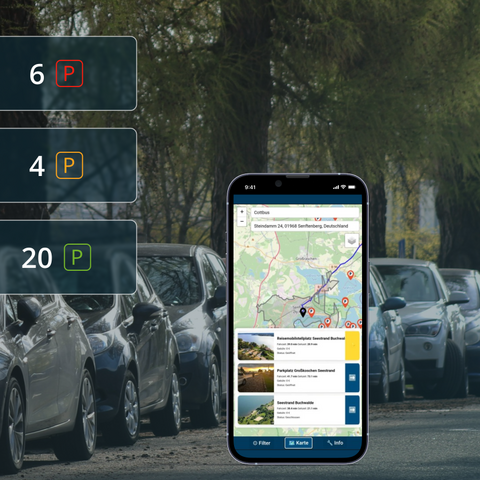
Lukas Hautzinger's project exemplifies the potential of data-based mobility solutions when they are consistently aligned with real needs. Even though iPLS is an innovative project within the scope of a master's thesis and not a product ready for series production, it clearly shows how artificial intelligence and forecasting models can become the basis for smart traffic control in the future.
Such approaches are an important building block for sustainable mobility in cities and regions. They combine user comfort with municipal control capabilities and contribute to making traffic smarter, more environmentally friendly, and more livable.
In the long term, this concept has the potential to redesign the organization of parking spaces and establish itself as a "Hautzingersche parking guidance system" in municipal mobility.


